Showing posts with label Ohio. Show all posts

Saturday, July 11, 2026

The Patriot's Son: How a Tombstone Changed an Ancestor's Birth Year


Some genealogy discoveries happen in archives. Others happen in courthouses. And occasionally, they happen because a tombstone has weathered just enough for a hidden detail to become visible.

This is the story of how a ten-year search ended with a surprise that changed what I thought I knew about my fourth great-grandfather, Thomas Duer.

Last week, I shared my visit to the grave of my Revolutionary War patriot ancestor, John Duer, in Mahoning County, Ohio. While standing beside his restored monument, I reflected on the journey that brought him from colonial New Jersey to the Ohio frontier.

What I did not realize at the time was that another member of the family was about to provide an even more important clue.

Thomas Duer, John's son, died in Trumbull County, Ohio, in 1829. Proving the relationship between father and son was not straightforward. In fact, it took me nearly ten years to assemble enough evidence to satisfy the standards required by the Daughters of the American Revolution.

The challenge was that Thomas predeceased his father.

When John Duer's will was written, Thomas was already deceased and therefore not named as an heir. Neither were Thomas's children. At first glance, that omission appears troubling. However, records suggest that John had already divided portions of his property with Thomas years earlier when the family settled in Ohio. Tax lists, census records, church associations, and witness statements repeatedly placed the two men together.

Eventually, documentary evidence, combined with DNA results, confirmed the relationship.

Yet one mystery remained. Where exactly was Thomas buried?

Years ago, I contacted a local historical society and was assured that his grave still existed in the old Pricetown Cemetery. The former society president told me she knew exactly where it was because she had once tripped over the fallen stone during a cemetery cleanup project.

She explained that volunteers later repositioned the marker but could not recall its original location.

The story always bothered me. If the stone had been moved, how could anyone know where Thomas was actually buried?

Then another unusual event occurred.

While attending a genealogy lecture in Florida several years later, I noted on the sign-in sheet that I was researching families from Trumbull County, Ohio. Before the lecture began, I was called to the registration desk where a complete stranger introduced himself.

He had grown up in Trumbull County and wanted to know which families I was researching.

When I mentioned the Duers, he offered to visit the cemetery on his next trip north and photograph the grave. True to his word, he later sent me a photograph and refused any compensation for his time and effort.

The image was invaluable or so I thought.

The directions he provided to the cemetery turned out to be completely wrong.

When my husband and I finally attempted to visit the site ourselves this summer, we found ourselves driving in circles through rural Ohio. Roads did not intersect where we expected them to. Landmarks were missing. Several times we questioned whether we were even looking in the correct place.

Eventually, we abandoned the directions and relied instead on the cemetery's coordinates.

That decision finally brought us to the cemetery.

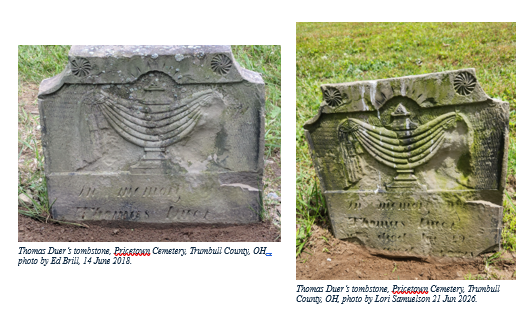
The moment I located Thomas's stone, something immediately seemed odd.

It was not where I had been told it would be.

The marker stood upright in the middle of a row rather than at the end. Nearby were fragments of other broken stones. Another marker of similar size and construction lay face down nearby. Looking carefully at the evidence, I began to suspect that the stone had probably been repositioned close to where it originally fell rather than being moved to an entirely different location.

That was interesting but it was not the real surprise.

The real surprise came when I compared the old photograph with what I was seeing in person.

Time had changed the stone.

Years of weathering and soil erosion had exposed portions of the inscription that were not clearly visible before. Looking closely, I could now read details that had previously been hidden.

There it was.

"Died Jul 29th."

And beneath that:

"Aged 51 years."

I almost collapsed.

For years, online information had reported Thomas's death month as November. Probate records confirmed only that he died during 1829. No reliable source had ever provided his exact age.

Suddenly, I had both.

The new information shifted his estimated birth year from approximately 1775 to about 1778 or 1779.

Three or four years may not sound significant.

Genealogists know better.

A change of that size can affect which records belong to an individual, alter assumptions about military eligibility, reshape migration timelines, and even redirect research into earlier generations.

The most astonishing part was that this information had been sitting there all along.

The tombstone had not changed.

The inscription had not changed.

Only our ability to see it had changed.

Genealogy often teaches patience. We learn to wait for records to become available, for DNA matches to appear, and for new collections to be digitized.

But sometimes patience works in another way.

Sometimes the evidence is already in front of us, waiting for conditions to reveal it.

As I stood in that small Ohio cemetery, I was reminded once again why visiting ancestral sites remains so important.

Photographs are invaluable.

Online memorials are helpful.

But nothing replaces standing where your ancestor rests and seeing the evidence for yourself.

Two hundred years after Thomas Duer's death, he still had one more story to tell.

All I had to do was show up and look.

Friday, July 3, 2026

What Patriot John Duer's Tombstone Revealed


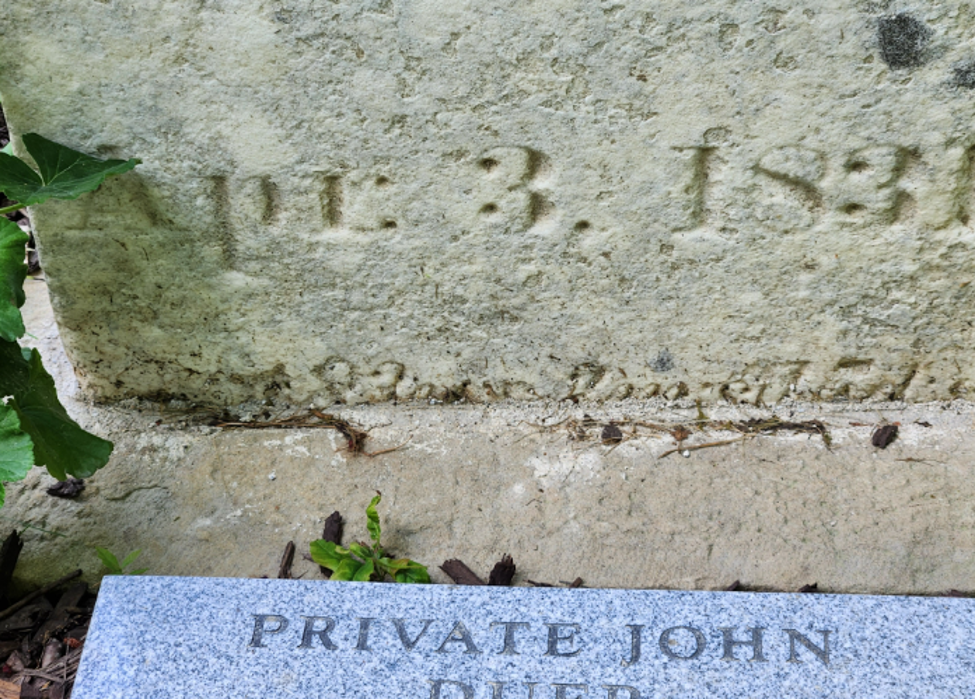
Engraving on the bottom of John Duer’s original stone, Covenanters Cemetery, North Jackson, Mahoning, Ohio; photo by Lori Samuelson 21 June 2026.

As America prepares to commemorate the 250th anniversary of its founding, many genealogists are taking a fresh look at the men and women in their family trees who witnessed the nation's earliest years. Last month, I had the opportunity to visit the grave of one of those individuals, my patriot ancestor, John Duer.

What I expected to find was a tombstone.

What I discovered was a reminder that even after years of research, our ancestors may still have stories left to tell.

John Duer was born in New Jersey during the colonial period and served in the Sussex County militia during the Revolutionary War. Like many veterans of that era, he later joined the westward movement that transformed the young nation. By the early 1800s, he had relocated his family to northeastern Ohio, then part of America's frontier.

For years I had wanted to visit his grave in Covenanter Cemetery near North Jackson, Mahoning County, Ohio. Since my husband and I were returning home from a genealogy conference in Pennsylvania, we decided to make the trip.

The journey did not begin as planned.

Following directions found online, we entered the cemetery address into our GPS and promptly arrived at the local police station.

Certain that a mistake had been made, I was relieved to find an officer leaving the building. When I asked where Covenanter Cemetery was located, he looked surprised. He admitted he was not a history enthusiast and knew little about local cemeteries, but he did remember reading a recent newspaper article about a small historic burial ground nearby. He provided directions and wished us luck.

As it turned out, luck was exactly what we needed.

The cemetery sits atop a hill surrounded by mature trees, overlooking the countryside. A recently installed wrought-iron gate marks the entrance. Someone had clearly invested considerable effort in preserving the site. The grounds were meticulously maintained, flowers had been planted, and an American flag fluttered beside the grave of my ancestor.

I stood quietly for a moment, reflecting on the path that had brought John Duer there.

When he arrived in Ohio, this area was still developing from wilderness into settlement. Roads were primitive. Communities were small and isolated. Yet families like his came seeking opportunity and land, helping to build the nation that emerged after independence.

Then my husband noticed something I had overlooked.

Near the bottom of John's original tombstone was an inscription that was difficult to read. Looking closely, we realized it appeared to identify the militia unit in which he served.

This immediately caught my attention.

Although records had long established that John served during the Revolutionary War, I had never found documentation identifying a specific militia number. If the inscription can be fully deciphered, it may provide an entirely new avenue for research.

There was another surprise waiting.

Resting behind John's monument was a separate stone engraved with the name "L. F. Gager Warren." At first I wondered whether it might identify the mason who had carved the original marker. Curious, I carefully examined the stone and even tilted it slightly in hopes of finding additional information.

Unfortunately, the only occupants revealed by my efforts were two annoyed daddy longlegs who clearly preferred not to have their afternoon nap interrupted.

No additional inscription appeared, and the mystery remains unsolved. It appears that the broken stone was likely found elsewhere in the cemetery and used to prop up John's stone as research from a distance cousin, Vicki Urban, uncovered that L. F. Gager was a Connecticut born stone mason who had relocated to Warren, Ohio but that was long after John had died.

Yet that is often how genealogy works.

We set out expecting answers and instead discover new questions.

As I walked through the small cemetery, I realized that the trip had already accomplished far more than I had anticipated. I had not uncovered a dramatic new record or solved a long-standing mystery. Instead, I had gained something equally valuable: context.

Standing beside John's grave transformed him from a name on a pedigree chart into a real person who had lived through extraordinary times. He witnessed the birth of a nation, helped settle a frontier, and left behind descendants who still remember his story more than two centuries later.

The visit also reinforced a lesson I have learned repeatedly throughout my years of research: never assume you already know everything there is to know about an ancestor.

Sometimes the most valuable clues are hiding in plain sight.

A partially weathered inscription.

A forgotten marker.

A cemetery located somewhere other than where you expected.

Or perhaps a story that has been waiting patiently for generations to be rediscovered.

As America approaches its 250th birthday, I am grateful for the opportunity to remember one patriot whose journey helped shape both a nation and a family.

And little did I know that another member of the Duer family, buried just a few miles away, was about to reveal an even bigger surprise. More next week.

Friday, December 26, 2025

Part 5: Postmarked in Purgatory: The Mail That Might Never Arrive


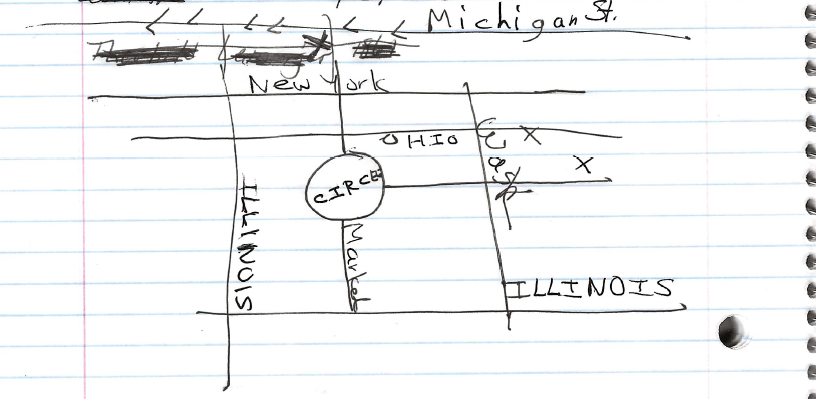
Possible Post Office Locations in Downtown Indianapolis

This is the last in a series on my adventures obtaining family records for dual citizenship. You can read early posts here, here, here, and here.

We had tried to get family documents from Illinois and Indiana in person and used email to obtain records from Florida and Arizona. Unbelievably, the online records had already been mailed to me while I tried to obtain the in person ones. Why? Because some states are more efficient then others. Illinois & Indiana, not so much.

We decided to drive two hours south east to acquire my father's birth record in Mercer County, Ohio. The clerk was warm and welcoming which was such a change from our experiences elsewhere. A problem surfaced quickly; the record for my dad in their computer claimed he had been born in 1939. Umm, no, he would have been the youngest enlistee in World War II if that was the case. I had a copy of the birth and death certificate which I shared with the clerk. She couldn't print a certified copy because whoever had input the information into the computer had made a typo. She went to search for a hard copy and found it. It was dated 1939. I believe what happened is that my father went to the office to obtain a certified copy so he could get his Social Security card. The clerk handwrote a new one and when my father looked at it he likely informed the clerk she had added the wrong year for his birth. I suspect she gave him a corrected replacement but kept the error record in the files. So, whoever input the info wasn't at fault.

It took over an hour and three transferred phone calls to Columbus for someone with tech knowledge to inform the clerk how to issue the birth certificate with the correct date. Meanwhile, others were arriving for records and I was surprised to learn that another person was also seeking dual citizenship.

With record finally in hand we decided to make an attempt to drop off the death records request that Gary refused to accept earlier in the week. So, it was back home again in Indiana. Sigh.

There’s no walk-in service at the Indiana State Department of Health in Indianapolis, and I knew that. What the website didn’t say was that you also can’t drop anything off. Still, I figured it was worth a try.

Two and a half hours later, we pulled into the very last spot on the sixth floor of a parking garage. $35 an hour. But hey, it was next to the elevator. Life was looking good.

Until it wasn’t.

Disappearing Buildings and Imaginary Signs

We couldn’t find the building. The address led us to a large office labeled Bank of America but surprise! It was actually the Department of Health.

Only in Indiana could a government agency masquerade as a bank to “save taxpayers money.” And if I were to complain to a legislator? I can already hear the syrupy voice:
“Now ma’am, we did you a big, beautiful favor by saving that signage cost, see?” (They always say “see.”)

There were no address numbers on the building. We finally wandered into another bank across the street, where someone kindly told us where to go.

If I had known what was coming next, I would’ve turned around.

The Plexiglass Purge

Inside the “Bank of Not-America,” a lone woman sat behind a desk topped with plexiglass, an absurd formality, given that it was the only furniture in the entire room besides a circular couch off in the corner.

She did not smile.

“We can’t take that,” she said flatly after I told her I had completed requests for death certificates.

I asked why.

“We don’t offer customer service.”

Well, clearly, that must be the vital records motto throughout Indiana.

I explained I’d driven from the northeast corner of the state because Gary refused to issue the records and whenever I mailed requests, they disappeared into the void.

“We’re very backlogged.”

At that point, my husband, officially done, asked if he could sit down. She pointed silently to the one chair in what was once the vestibule.

I asked where the nearest post office was. My thought: if I mailed it from just a few blocks away, maybe they’d actually receive it. Silly me.

She offered to draw me a map. I handed her my notebook.

That’s when it got weird.

Enter: The Scowler

Out of nowhere, a man’s voice boomed behind me:
“What can I help you with?”

Startled, I turned to see a tall man with a very unfriendly expression and a gun. Yep, it was an officer of the law. I had no idea he was even in the room.

I answered, “There’s nothing you can help me with.”

Apparently, that was the wrong thing to say.

He started yelling, “Tone it down! Tone it down!”

I wasn’t raising my voice. I hadn't even been speaking when began yelling. But suddenly I could see it all: me, tackled to the ground, handcuffed, arrested for attempting to find a post office to send for three death records that the department who issues them refused to take.

The woman at the desk piped up, “She’s a nice lady, she’s not a problem.”

He replied, “I’ll handle this.”

Handle what? Was he going to walk my envelopes to the post office for me? Hand-deliver them to the Department of Health? Please, don’t tease me.

He eventually got bored and retreated to the sofa, where another officer sat watching the show with amusement.

Yep, fun and games intimidating an old lady genealogist. Karma, baby. Let it be soon.

The Map of Madness

The woman finished her map and handed it to me proudly, saying, “I’m not much of an artist, but I think I did a good job.”

I looked at it: three horizontal lines, three vertical lines, a circle, and three X’s because she “wasn’t sure where the post office was.” Also, she misspelled Washington. It had taken her five full minutes to draw this.

I stared at the page, silently. She looked sad that I didn't appreciate her work.

I asked if it was walkable, thinking I could leave the car parked. “If you’re good at walking,” she said.

Not knowing what that meant, I asked how far it was.

“Maybe five or more blocks.”

Sure. We’d drive.

She said she should probably give me the address as well, there was another post office nearby, but she wouldn’t send me there because “it wasn’t very good.”

(Pretty sure that’s the one where all my mail has vanished into the ether.)

She had to call someone else to find the name and address of the post office she'd just drawn a map for.

I left, sad for the state of public service and even sadder that this was the outcome of my tax dollars.

The Last Gasp

It was now pouring rain.

I parked in what was probably an employee lot behind the post office and left my husband in the car in case it needed to be moved.

Inside: long line. No one at the desk. Classic.

Thirty minutes later, I sent off two envelope, each with certified requests for death certificates, destined for a building two blocks away.

Only in America can it take three days to deliver a letter that far.

It was scheduled to arrive on Saturday when no one is there to sign for it. Of course.

So maybe Monday. Maybe never.

And when it inevitably goes missing? I planned to take my receipt to my local post office, and they’ll tell me I have to go back to Indianapolis to get a refund.


At this point, I’m starting to think dual citizenship was absolutely the right decision. Even with all the hassles. Even with the yelling. Even with that map.

Next week, to begin a new year, I'll post a a look back at the favorite blog posts selected by readers for 2025. Stay Tuned.

Saturday, October 5, 2024

Creepy October - Past Hollingshead Connection to the Present


AI Image

It's October when I typically blog about the creepy coincidences that happen to me over the past year when I am doing genealogy.

I started a bit early, mentioning how I met some Irish and Scotts relatives through my recent travels to Great Britain.

I have another story to share but there's a back story to it so this will be a two part blog.

I've blogged and researched extensively on my Hollingshead family originally from Saxelby, England. Some of the findings were just down right strange! You can read about past blogs I've written about Daniel here, here, and here.

I've never before shared a personal story about why I am so interested in the Hollingshead family but I think it's time to do so.

In 2006, after spending time with a college friend who had transferred from the U.S. to Cambridge University in England, one of my adult kids informed my husband and I that they were going to apply to medical school out of the U.S. We questioned the decision but they were adamant with no reasons other than they felt they had to do that. After several acceptances, the decision was to accept the offer to St. George's Medical School in Grenada, West Indies. To be honest, I wasn't wild about this decision but once I visited I felt at home. After two years of study there, students transfer to either Great Britain, Canada, or various locations in the U.S. Our adult child decided to move to New Jersey.

I am not trying to be rude New Jerseyans but I just couldn't understand why someone would relocate from a beautiful tropical island to a snowy cold location. Really, I told my kid, no one does that. Child was insistent that this was the right place but couldn't explain why.

The adult child finished up their degree by living in Morristown, New Jersey. We visited several times and enjoyed the small town atmosphere. On one of our visits I happened to park next to a church cemetery. I looked up and was faced with a stone for the Byrd family. I had a brick wall Byrd family from somewhere in New Jersey. I decided I would contact the church but I always found it closed and got no response to emails. If you had asked me then, I would have told you we had no connection to Morristown; I thought the Byrd family was from Trenton.

Our last trip to Morristown was in the spring as our child was graduating and would soon leave for internship in another state. We drove one of our vehicles from Florida to New Jersey so that we could have two vehicles (ours and theirs) packed with belonging while my husband drove a small U-Haul to the new location.

On the way, we experienced a major traffic jam in Tampa which delayed us. Bored, I checked my email. There was a new email from someone I didn't know, Edgar Duer Whitley. The gentleman had found my online public tree on Ancestry.com and was excited that I was providing him info on my Duer line that he had been unable to research. I was spelling Duer as Dure - the original family spelling, so had not connected to his research. He attached his genealogical research which connected to Daniel Hollingshead. I had never heard of Daniel.

I responded I would look at the information when we returned from our trip and would get back with. It was three weeks later when I downloaded the information and I was astounded.

Our child had been residing on land that had once been owned by their 8th great grandfather. Even more astounding was that Daniel Hollingshead had relocated to New Jersey from the West Indies. So I stood corrected, others in our family beside my kid have relocated from the West Indies to New Jersey.

But there's more...when I shared this with my child I got a laugh. Our kid had traveled around the area of Cambridge and had visited Saxelby, where Daniel Hollingshead migrated from. It was there that they got the idea to go to a medical school that was international. Was this a channeling of a long dead ancestor?

One of Daniel's sons had become a noted physician in New Jersey. The location where our child had attended undergrad, Boston, was the same area where one of Daniel's grandson had migrated to, Boston. My line went on to Ohio via a stop in the wilds of Virginia, now known as West Virginia. Our adult child was leaving New Jersey for West Virginia. Creepy!

We joked with our child that they would probably end up in Ohio one day since they seemed to keep following that family line's migration route. That hasn't happened yet, however, they live about 10 miles from the Ohio border and work as a physician in Ohio. It's just two counties away from where the Duers, who married the Hollingshead, settled.

As for Edgar, as soon as I reviewed the information he had sent and realized the migration path I wrote to him. I never got a response. Evidently, Edgar had died in the few short weeks after he sent me his life's work. I can't explain how this all happened. It's wonderfully weird and unbelievable. I may have eventually broke through my brick wall without Edgar's research but the timing was perfect as we had a family member in the areas that I could stay with while confirming the information. I guess a side moral of this story is contact those folks you find online and share your research widely.

Next time, I'll tell you another strange connection regarding Daniel and I that occurred while I was in Great Britain.

Friday, September 22, 2023

Closer to Fulfilling Another Genealogical Wish


Editors. Mercer County, Ohio Cemetery Inscriptions Volume VI. Celina, OH:  Mercer Co. Chapter OH Genealogical Society, 1990 found at Mercer County, Ohio Public Library in Celina.

While I was in Celina, Ohio, as I mentioned last week, I found another hint about John Duer. I had blogged twice this year about my search for his final burial site.

A year ago in June, in a book in Allen County Public Library, (Editors. Mercer County, Ohio Cemetery Inscriptions Volume VI. Celina, OH:  Mercer Co. Chapter OH Genealogical Society, 1990, np.) I had discovered that he might lie in row 15 of Kessler Cemetery in Ohio. The transcription simply noted "John Duer, unreadable."

Kessler’s trustee had years ago sent me a copy of their records but row 15 was missing. Both of John’s wives were buried at Kessler, along with some of his children, so it seemed logical that the book was noting his burial location.

My husband and I went out to the cemetery in March and found what we thought might be his grave but it wasn’t in row 15. The rows are not straight so it might have been, depending on how someone counted from the newer section. I thought it looked more like 14 but there was no stone in what I considered 15 so I could see how someone might interpret the rows differently. I was overjoyed anyway with the find.

Except, it wasn’t John’s burial place. When we returned in May with cleaning supplies it became apparent that it was for a child with the same name and who just happened to die the same year my John did. Sigh.

At the Mercer County Public Library, I found another book, and this transcription was clear about what was recorded on the stone in row 15. That stone is no longer standing in Kessler. You can see the top pic of the page.

What had me totally floored is that this book has the exact same title page as the one I found in the Allen County Public Library but the contents of the book differ. One must have been updated but it doesn’t note that anywhere in the volume I found in Celina. Here's what the page looks like for the volume in Allen County Public Library:

Editors. Mercer County, Ohio Cemetery Inscriptions Volume VI. Celina, OH:  Mercer Co. Chapter OH Genealogical Society, 1990 found at Allen County Public Library, Ft. Wayne, Allen, IN.

At this point, I decided to call it a day at the library and I headed for the courthouse.

Meanwhile, this wish remains, too, but with every find I get closer to solving this mystery.

Next week I begin my Creepy October series. By the time that concludes I can’t wait to share my courthouse experience AND the weirdest identity theft I uncovered from 1891. Stay tuned.

Friday, September 15, 2023

More Genealogical Wishes. . .

Photo by Lori Samuelson

Honestly, I didn’t expect to find much in the Celina, Mercer, Ohio library. I spoke with one of the librarians in August and she mentioned that the collection was held in a small room, the local volunteer didn’t come to help out researchers anymore, and there had been no response from the local historical museum contact in the past year so no information on the contents of that museum was available. Not very promising information to hear and besides, the location was 1 ½ hours from my home. Still, I’ve always wanted to visit as my paternal lines were in Mercer County from the 1840s through the 1940s so I hoped that some secrets would be given up.

Hubby was off on a trip of his own so I decided to take the day to research. I wasn’t sure how long I would spend at the library and depending on what I found, I might also visit the courthouse. This was the courthouse I contacted years ago when I was searching for a divorce record for a great-grandmother. It took me 9 months to get them to send me the record and it was only after, at Christmas time, I had sent a reminder email that I had been a good genealogist all year and all I wanted for Christmas was the record. I finally received it.

I had planned to arrive at the library when they opened at 9 AM but my crazy GPS took me to a lake, instead. It was a beautiful lake but definitely wasn’t going to help me locate records so I pulled out my phone and used an alternative GPS to find the library, about 10 minutes away.

I was amazed at the wealth of the information that I discovered! Some kind soul had compiled an obituary collection of 3 x 5” cards and they were stored in the old wooden card drawers. Remember those? Arranged in alpha order by author, title, and subject. What I found was surprising as I had looked for the burial location of John Duer and Peter and Catherine Lanpher/Landfair for years and wasn’t able to find it. The obituary card listed an obit for Catherine. Wow! But there was a problem – it listed no source. So whoever typed the card likely had found one once but where did it now reside? I looked through every piece of paper in the file cabinet by surname. Scanned each shelf book by book looking for a cemetery book, church record, death index, and family genealogy – nothing was found for Catherine.

I went to look for a librarian to see if they knew what the sources for the obit cards were and was told they came from a newspaper that was on microfilm. The librarian set it up for me but alas, going forward 4 weeks for this weekly local paper, no obit appeared. The obit did not list a cemetery, which was the main interest, but I also was interested in seeing if the obit had other information that might have been left out of the card. Struck out again but I know that somewhere out there one resides and so this item remains on my wish list.

Next week, more about the Celina research trip. 


Saturday, March 25, 2023

A Miracle Find No Thanks To An Index

Ohio, Trumbull County, deed records, John Orr and Wife Deed to the Widow & Heirs of Thomas Duer, digital image; FamilySearch.org:  accessed 20 March 2023, citing film 005492829, images 3-4, p. 2-3. Last week I went to FamilySearch Library in Salt Lake City, Utah with one main goal - to prove that John Duer (Circa 1803 PA-1885 IN) was the son of Thomas Duer (1775 NJ - 1829 OH). I'll blog next week about researching in the renovated library but for now, this story is just unbelievable! I have long wanted to prove that I am a descendant of Patriot John Duer (1748 NJ - 1831 OH). I've written two analyses on indirect evidence linking Patriot John to his oldest son, Thomas, who died intestate, and Thomas's son, John, who was of age when his father died and therefore, not named in probate. Early on in my research, I was advised to check land records and I did. The problem was that some early deeds for Trumbull County, Ohio are missing. Both Patriot John and Thomas lived next to each other from 1809 until Thomas's untimely death at age 54 in 1829. Since Thomas died before his father he was not named in his will, however, one of Thomas's daughter's husbands was named in Patriot John's will as receiving land. All of the rest of Patriot John's children were noted in the will. He had one other child who had predeceased him; for that child, the grandson was named as receiving cash. In Salt Lake City I was looking at volumes written by Henry Baldwin in the mid-1800s. I found the information I needed to prove that Thomas was the son of Patriot John. The books didn't help, though, by showing Patriot John's grandson, John, was Thomas's son. I asked several AGs and research specialists for ideas. I had looked for records that included Bibles, Presbyterian Church, cemeteries, obits, probate, wills, deeds, tax records, court records, identifying census tic marks, journals for pioneers/circuit riders, genealogy society records, mug books, and contacting people who had online family trees. One AG recommended checking Masonic Lodge records as he noted that many Presbyterian farmers were members. FamilySearch has New York Masonic records but not Ohio so I reached out to the Public Library of Youngstown, Ohio, and was referred to Warren County Public Library. I sent an email request noting I was looking to prove a relationship through Masonic records. The following day I received a wonderful reply - no Mason records but someone once left 4 pages of typed research notes on the family in the surname files. The librarian scanned them for me. Those notes were undated, the library had no idea who had left them or when. I had contacted the library for various help over the years and no one had ever mentioned these 4 pages of notes. I figured the Masonic records were a long shot but I admit, I was initially disappointed when I looked at the notes. I began reviewing the attachments and on page 3, almost fell out of my chair. The individual who had left the information had abstracted deeds. I had seen every deed at FamilySearch.org but one. The one that was not listed in the index was the one that had named the wife of Thomas and all their children, shown above. It neatly sold land that was mentioned in Patriot John's will to another of Thomas's children. The husband of that child sold the land to the named son of Thomas. I had looked page by page at early deed books but stopped at the end of 1832 as that was when the estates were finalized. I used indexes going forward. This one transaction wasn't indexed. The land was sold in 1832 but not recorded until 1833. It never dawned on me to go page by page for the following year AFTER the estates were closed. I could have solved this problem years ago if only I hadn't relied on the index and remembered that deeds are not always recorded when they were made. Lessons learned!

Saturday, February 18, 2023

Duer Dilemmas

My long-time readers know my obsession with the Duer family. I've been good, though, and haven't blogged about them in almost two years. Honestly, I have not researched their lines since the pandemic was full throttle. Last month I watched a Legacy Family Tree presentation by Elizabeth Shown Mills who is, lucky for us, back from retirement. The lecture gave numerous ideas on how to problem-solve using "trivial details." A comment she made resonated with me; there are going to be times that we will NEVER find a document that clearly establishes a relationship. I'm one of those genealogists that believe that somewhere, somehow, that long-sought record will unveil itself and leave me with a happy ending. Too many Disney movies, I guess! The lecture made me come to my senses. It was time for me to resurrect, review, and re-analyze all of my Duer findings and move toward a conclusion. Briefly, my 5th great grandfather, John Duer (1748-1831), died after my 4th great grandfather, Thomas Duer (1775-1829) so Thomas and his family were omitted from John's will. Another daughter of John's who had died early was also omitted, however, her only son was named in John's will. None of Thomas' children were named. Thomas had died intestate (of course). The family originated in New Jersey; only one document there ties John and Thomas together but doesn't state a relationship. That document was both men witnessing a will for a neighbor. John is found in a deed in what is now West Virginia. He made the purchase in 1792 but didn't move until about 1797. By 1805 he was in Trumbull County, Ohio. As was Thomas. There is no deed for either John or Thomas in the early years in Ohio but they are on tax lists, next to each other. Property maps show them residing next to one another. And that is all I have. Not! Using what Mills discussed, I pulled out every document I had for both men and created a different timeline than I had previously done. This time I made 5 headings - Date, Event, Place, Source(s), and Name. I began with the earliest records I had for John. Some of the sources, I'll admit, are stinky like this for birth - http://familytreemaker.genealogy.com/users/b/e/a/Scott-C-Beal/GENE4-0004.html (no source) - though I recorded each as together, clues are provided. In the Name column, I recorded who was named in the record. The few that showed John and Thomas together I highlighted in pale green. I then went through Thomas's records and fit them into the same timeline in chronological order. This is where I realized there were many more connections between the two men - guardianship of Thomas' children, land sales among the surviving family members, and religious affiliation. I highlighted those in pale orange. Yes, it is an ugly color scheme but it does stand out. I then wrote 9 pages of relationship proof. It also includes DNA. My plan is to share this with colleagues over the next few weeks for their insight. Possibly, I'll be publishing it, too. I may even approach a lineage society and complete an application. My husband remarked, "So, you're now done with the Duers." I thought, "Is one ever done with a line?" You know the answer. No, in analyzing the John-Thomas information I noticed some very interesting (to me!) nuances. I decided to take on a major Duer surname study of the New York, Antigua, and possibly Connecticut lines in the hope of identifying their shared relative. Clearly, they all had a shared relationship both in the Caribbean and in the Colonies. It also involves John Duer's maternal grandfather, Daniel Hollingshead, who I have written extensively about. During the pandemic, I was able to find how Daniel, a Presbyterian, was related to the Quaker line. I was unable to understand his relationships with the New York Duers who married into the Alexander family, as Daniel did, but those Alexander families don't seem to connect, either. It is a convoluted mess! As you can see by the tree shown at the top of the page, every generation of every line has a John, Thomas, William, and Daniel. And, they intermarry. And, they don't leave a lot of records. And researchers confuse them, particularly the Ohio and Pennsylvania John's Revolutionary War Service. It's going to be fun to sort this all out so look forward to more blogs about my Duer Dilemma!

Saturday, March 20, 2021

Forgotten Jane Morrison Duer

Courtesy of Cousin Becky on Find-a-Grave. Burial in Kessler Cemetery


Courtesy of Cousin Becky on Find-a-Grave. Burial also in Kessler Cemetery. John Duer was married to Margaret at the time of his first wife, Jane's burial, in 1866.

Why was Jane Morrison Duer divorced from her husband John after about 37 years of marriage and eleven children together? Jane followed John from her native Trumbull County, Ohio to Killbuck Township, Holmes, Ohio and on to Mercer County, Ohio over their long years together. What would cause the relationship to end? I have a working hypothesis but no proof. This was a family most likely stressed by societal and personal crises.

Of the 11 children, 5 predeceased Jane. The couple's first child, a female, died between 1830-1840. We only know of her existence from the 1830 census record's tick mark that she was in the age group as being "under 5." No grave has been discovered for her so she remains nameless.

The next child, William, was certified as insane at age 23 in Holmes County and sent to the Ohio Lunatic Asylum. There are only two other records found for William. In the first, he was listed in the 1860 U.S. Federal Census as an insane laborer, age 30, residing in the asylum in Columbus, Franklin, Ohio. That is correct but his birth in Germany is not. That's interesting to note as his sister and several siblings did marry into the Kuhn family that were immigrants from Germany. Maria, William's oldest surviving sister, had her birth place listed in error as Germany on her death record provided by her son. William and Maria most likely were born in Trumbull County, Ohio before the family relocated to Holmes County in the late 1930's.

The second document is a notice in the newspaper, the Holmes County Farmer, on 14 March 1861 recommending that community members write to him and the 7 other "inmates." I infer he must have been the longest committed as his name appears first. Although alphabetically his surname would be recorded first the others listed are not in alpha order. The article states that "some of these poor unfortunates are supposed to be incurable." Most of his family had moved on to Mercer County, Ohio by the time the clip was published. No death date has ever been found for William so I suspect he died at the asylum. I am waiting for the organization that holds the records to reopen as they are closed due to the pandemic.

Next oldest son, Thomas Ayers, relocated to Winterset, Madison, Iowa by 1860, enlisted in the Civil War and died unmarried and likely childless of Febris Typhoides on 5 May 1862 in Cincinnati, Ohio.

Daughter Maria wed Henry Kuhn and the couple lived two residences away from Jane and John in 1860. Henry enlisted in the Civil war, leaving Maria to raise their young children. During this time period, John and Jane divorced. Although no record has been found, John remarried in 1864, two years prior to Jane's death. John relocated with his second wife to Adams County, Indiana where he had two deeds for land. Neither deed had then wife Jane's name on them. When John died, Maria is not named in his will. Maria's death certificate names both of her parents.

Son John B. had married first in 1860 but his wife Keziah died a few months after the marriage. He then married Carolina, one of the sibling of Maria's husband, in 1863 and moved across the state line to farm in Adams County, Indiana. He seems to have had a falling out with his father as like Maria, he is not named in John's will, even though he was residing in the same county as his father. Marriage records found do not name John B.'s parents. No death certificate for him as been located.

Mary Ann was found living with John and his second wife in 1870, however, she also was not named in his will. She may have had a falling out with her sister Maria as shortly after mother Jane's death in July 1866, Mary Ann took Adam Kuhn, Maria's brother-in-law, to court in Mercer County. Pregnant with Adam's child, the unmarried couple could not agree on a financial settlement. Adam, in December 1866, was jailed by Jacob Baker, who married my 3rd great aunt, Caroline Bollenbacher, as Adam refused surety.

Sister Maria and her husband Henry was close to Adam as evidenced by their naming their son, born in February 1866, after him.

Mary Ann and Adam's child must not have survived as there is no further court records of payment. He married an Elizabeth or Catharin Harper in Van Wert, Ohio 16 January 1868 and went on to have 5 daughters before dying at age 44, possibly due to injuries sustained during the Civil War when he fought in Union Company F, 99th Ohio Infantry.

Mary Ann married first, James Furman in 1875 who must have died shortly after the marriage as she married second John L. Ceraldo in 1879. John's first wife had probably died as the child, Daniel, shown living with Mary Ann and John in 1880 would have been too old to have been theirs together. No record is ever found again of the boy who is presumed to have died. Mary died in 1909 in Michigan; her husband named John Duer as her father but her mother's name was unknown. Although she had married after Jane's death, why would she have not informed her husband in their 30 years of marriage what her mother's name had been? Like Maria and John B., Mary Ann was not named in her father's will.

Son Prosser remained in Holmes County, Ohio after the rest of the family relocated to Mercer County. He enlisted in the Civil War and died at Stones River, Tennessee on 2 January 1863. He did not marry or have any known children.

Daughter Sarah Jane married another sibling of Maria's husband, Phillip, in 1870, four years after Jane had died. Sarah was also not named in her father's will. Although she died in 1920, no death certificate or obituary has been found for her.

Son Mark Duer disappears from records after being found in 1850 with the family in Holmes, Ohio. He likely died there but no burial location has been found.

Son James William was found living with John and his second wife in Adams, Indiana in 1870 yet he, too, was not named in John's will. When James wed in 1887 he named his mother as Sarah J. Marisum sic Morrison. James would have been 18 years old when his mother Mary J[ane] died. How did he not remember her name? Perhaps because she was called by her middle name and he thought of his sister Sarah and not Mary as having the first name as his mother. He spent the rest of his life living in Adams County where he was killed in a bike accident. He death certificate names his father as John but the mother was listed as unknown. It was completed by his son, Elra Leroy. Elra was born 6 years after his grandfather John had died. How did he remember John's name but not the name of his grandmother Jane?

Youngest child, Angeline, was named in her father's will. She is the only child of John and Jane's to be named. She was living with him and his second wife in 1870. She married in 1874 and remained in Adams, Indiana until her death in 1933. Like her siblings, her father John is named on her death certificate. Her mother is recorded as Catharine, born in Ohio. The information was provided by Angeline's daughter, Effie. Effie probably remembered her grandfather as she would have been 9 years old and living in the same area as him when he died. Where Effie came up with her grandmother's name as Catherine is unknown as there is no Catherines in the family; her paternal grandmother's name was Nancy.

Jane is buried in Kessler Cemetery and according to the trustees, the records are incomplete. They do not show who purchased the plot or if her husband John is buried next to her as family lore claims. There is a sunken area that appears to be burial next to Jane but records do not exist to state who is interred there. There is no tombstone. John's second wife was buried in Kessler but in a different location. John is not buried on either side of his second wife. What is obvious is Jane's tombstone that is boldly engraved "wife of John Duer" even though she wasn't at the time of her death.

I suspect daughter Maria purchased the headstone as she was the only child still residing in Mercer County at the time of Jane's death that had the means to afford it. Maria's husband was a prosperous farmer and active in the community. In my opinion, Maria wanted the legitimacy of the first marriage noted for eternity.

It's likely that Margaret's children paid for her tombstone and wanted to show the world they, too, were legitimate so also engraved their mother as the wife of John.

The year 1866 must have been a tremendously difficult time for Maria. She had 5 children age 7 and under, her parents had recently divorced, her father remarried, her husband was away fighting for the Union in the Civil War, she has a brother that was committed to an insane asylum, 5 deceased siblings and her sister files a bastardly charge against her brother-in-law. What a mess!

But my underlying question is why did Jane and John's children not hand down their mother's name to their spouses/children?

Perhaps the state of the union, along with the loss of so many children caused Jane to suffer from the same melancholy as her son, William. John may have abandoned Jane for a new relationship with the widow who owned property close to his newly purchased land across the state lines in Indiana.

I believe Jane was forgotten by her adult children because it was too painful to remember those difficult times. They did not want to inform their children of their mother's and brother's mental state. No family member I have reached out to was aware of Williams insanity commitment. The family just didn't speak about painful situations.

Last week I received a call from a clerk with the Mercer Ohio Common Plea Court. She had searched for a divorce record for John and Jane between 1860 and 1866. None was found. Perhaps John abandoned Jane and the paperwork was filed in Adams County, Indiana where I'll be searching next. It's possible that single document may help me better understand the straw that was the backbreaker of the relationship. The search continues!


Saturday, February 20, 2021

Researching Step Sibs Unveils a Treasure Trove

Photo courtesy of Tut on Find-a-Grave


A few blogs ago I mentioned I needed to check out the sibling and step siblings of Margaret Ann Martz Searight Duer to try to discover why she relocated from Hardin, Ohio to Adams, Indiana.  I guessed that she had met my John Duer in Adams as he was a property owner in the same area as Margaret.  Turns out, there was much more involvement than I thought.

Since Margaret was the second wife of John, I had never researched her family since they are not related to me, or so it seemed.

Online trees showed Margaret was born to the first wife, Margarethae Himmelsbach, of George Peter Martz in Germany.  I have found a baptismal record for another child of the couple, Catharina, born 17 September 1830 in Rheinzabern, Pfalz, Bayern.  The child and the mother must have died shortly after as George married Elizabeth Goetz Martz, the wife of his deceased brother, John.  The second union produced eight children.  I never found a birth record for Margaret and determined her birthdate from her tombstone shown on Find-a-Grave.

Like Margaret and her first husband, George Washington Searight, “father” George and “step-mother” Elizabeth lived in Hardin, Ohio in 1850.  By 1860, some of the children were still residing with George and Elizabeth who had moved to Mercer County, Ohio. 

Interesting, I thought!  Perhaps John hadn’t met Margaret in Adams, Indiana but instead, in Mercer where he was found living with his first wife, Jane, in 1860.  Actually, they are 3 pages away in the census from where John and Jane lived.  Also living nearby, just two residences away, was daughter Maria Duer who had married Henry Kuhn, also an emigrant from Germany.  Perhaps John and Margaret met at a community event as Henry Kuhn was a leader of the German settlers in Mercer County. His wife, Maria, who was not German, even has an obituary in the German newsper.

Knowing that Margaret had family in Mercer helped me better understand why she was buried there and not in Indiana.  I still had no answer as to why Margaret purchased property in Indiana so I took the time to learn about her step siblings, thinking that perhaps, they lived in Adams County.

I decided to start with “step sister,” Hannah Lucinda and what a surprise I found!  Hannah died in Missouri before 1880 when the census shows her husband, Abraham Orr, residing with his brother, Thomas.  I was interested in learning more about Abraham because he was a property owner at one time in Trumbull County, Ohio, where my John Duer was born and where he first married.  In researching Abraham I discovered his mother was Anna Duer, sister to my John Duer.  Who knew these families were interrelated! It gets even better – After Hannah Lucinda died, her youngest children, Mary and Phillip Orr, are found living in the household of Phillip Martz, “step-brother” of Margaret in (drum roll, please) Mercer, Ohio.  So the Duers and Martz’s were connected prior to John’s marriage to Margaret.  No telling when or where they first met!

I hit pay dirt when I got to “step-brother,” Eli Martz.  He had a bio in amugbook from Mercer County, Ohio that, although not 100% accurate, provided me with background information about Margaret and her family. 

I thought it strange that Eli has two entries and the information is slightly different.  The first, names him Eli Martz, “the son of George P. and Elizabeth (Goetz) Martz.” P. 429.  I read this entry first.  When I finished the article I noticed the next article was for an Elisha Martz.  Hmm, who could he be? 

Elisha Martz was the “son of G. Peter and Elizabeth (Goetz) Martz.” p. 430. Yes, George P. is the same man as G. Peter.  Elizabeth Goetz Martz is the same mama.  At the very end of Elisha’s article the confusion is cleared – Eli and Elisha are brothers.  Why the parents would have named them so similarly I have no idea. 

Their stories have a few discrepancies which makes this very interesting!

Both stories state Margaret emigrated with her STEP-father and 3 of her step-brothers to Frederick Town, Maryland about 1830.  All of the online trees have Margaret’s father’s name wrong – it was not George Peter but George’s brother, John Martz.  George Peter was Margaret’s uncle who raised her after his brother died and George married the widow.  That explains why no record for Margaret’s birth has been found!

According to Eli’s article, the family arrived in 1830, however, the twins, Phillip and Caleb, were born in 1831 in Germany so that is not correct. Elisha’s article states they arrived in 1833.  That makes sense and would explain the longer than usual lapse in children's births.  The couple seemed to have children annually in Germany but there is a longer gap between the twins (1831) and Eli in 1834.  Having twins and moving to start a new life in a new country would definitely have put a damper on having another child at the original rate. 

Margaret’s uncle was a shoemaker but decided he wanted to try farming so he relocated to Sandusky, Ohio after 3 years in Maryland, according to Eli, or 18 months, according to Elisha.  Really, what’s a year and a half?!.

Quickly deciding raising corn wasn’t for him, they packed up with the intent to return to Maryland.  On their journey they stopped at Wayne County, Ohio where they decided to stay for 14 years, per Eli, or until 1848, per Elisha. 

George bought land in the then wilds of Mercer County, Ohio but on the way in 1847 (Eli) or 1848 (Elisha), the family decided to stop in Hardin County, where they were found in the 1850 census.  Both agree in 1852, the family made their way to Mercer.  After his second wife died in 1876, says Eli, George relocated to Illinois where he died “about 1882.”  Elisha says George relocated to Illinois in 1864. He doesn’t say when George died. He does gush about what a great dad George was; Eli says nothing.  Hmmm.

This leads me to a big WHAT?  So, sons Eli/Elisha did not keep in close contact with Pop, as the year discrepancy is rather large of when George left Ohio not to mention they don’t know when their dad died.  Seems like this is a trend with the Duer siblings too, who never told their children their mother Jane’s name.  What is going on with these folks?

Since George's wife, Elizabeth, was found living with Eli in 1870 and George is not found in any record after 1860, I'm thinking that both Eli and Elisha were somewhat accurate about George's whereabouts. Eli would have known when his dad left the area because mom was in his household. Elisha might have remembered when his parents split households, probably in 1864.

The mug book names George’s 9 children, the eldest, being Margaret, “the widow of John Doer, who resides in Adams, county, Ind.” p. 429 or “Margaret, the widow of John Deuer, of Jay County, Indiana.” p. 430.  Yes, she was the widow but John wasn’t from Jay County  and I love the spelling of John’s last name!

The point, though, is I would have never located this had I not searched for more information on Margaret’s step siblings. 

The book goes on to note where every sibling resided and the only step-brother/cousin of Margaret that lived in Indiana was  Phillip.  However, he lived in Salem which is in southern Indiana, Adams is in northeast so Margaret clearly didn’t relocate to Adams because of Phillip’s move to that state. I’m thinking Margaret moved to Adams to be near John and away from ex wife Jane who most likely remained in Mercer. 

Now I’m intrigued as to why Uncle George (geez, I DO NOT need another Uncle George in the family) went to Illinois at an advanced age.  None of his children were residing there between 1864-1876. Supposedly, youngest daughter Hannah Lucinda died in Illinois per an online family tree but there is no citation. Her spouse was listed as a widow in Iowa in 1880 so possibly she died on the way to relocating west. Whether she stopped to visit her dad on the way, I don't know.

George didn’t appear to keep in touch with any of his children as no one seems to know what became of him. The year of 1864 is interesting to me as that was likely when John and Margaret married.  The Civil War wasn’t over yet.  Maybe there was just too much drama for a man up in age and he decided to leave his wife for a new start.  I say that because Elisha mentions that George’s wife died in Mercer.  Eli/Elisha both agree it was in 1876.

The mysteries may continue, however, the beauty of the information in the mug book is priceless.  What a wonderful example of why it’s important to research the relatives, no matter how distant they may at first appear to be!  My tree is becoming gnarled.

A Twist of Stones

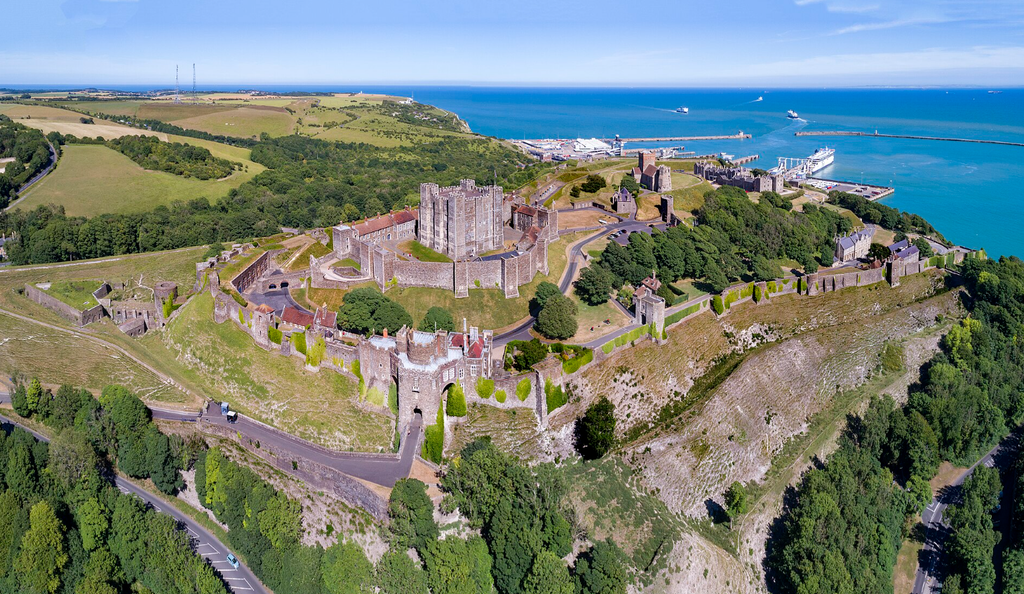
  Dover Castle Aerial Panorama by Chensiuyan, Wikipedia Commons, 26 Jun 2017. Sometimes genealogy has a strange sense of humor. I w...