Friday, April 24, 2026

Hints for Family History Travel in Chaotic Times


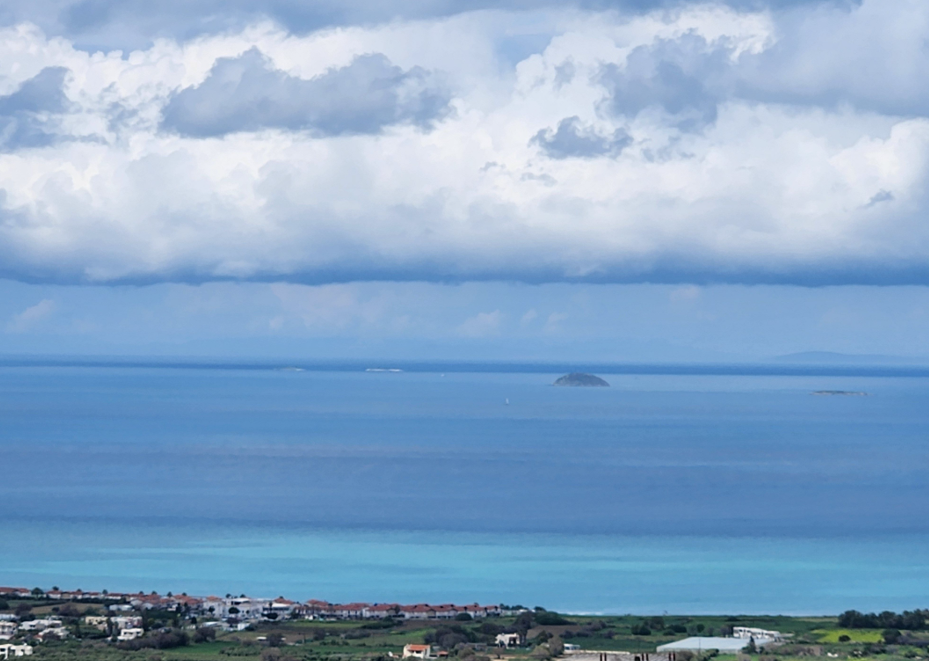
The Agean Sea from Kos Island, 4 Apr 2026, photo by Lori Samuelson.

Last week I shared the story of our trip to Greece including my long-awaited journey to Kos Island, where my family lived some 2,000 years ago, based on mtDNA and family tradition. This week, I’m answering the questions I’ve been getting and offering a few practical tips if you’re planning a similar trip to anywhere in the world.

Let’s start with the obvious, how do you even get to a remote place like Kos?

Your first step is to determine a route. Kos is not on the standard cruise circuit. You have two options: fly from Athens (about 55 minutes) or take a boat from Bodrum, Turkey (roughly 15 minutes). We flew from Athens since we were already returning there from Crete.

Once you’ve figured out how to reach your ancestral location, the next step is getting around. You can rent a car if you’ve secured an international driver’s license or you can hire a driver.

I hire a driver. Every time.

Why? Because I don’t need the added stress of navigating unfamiliar roads, signs, and driving customs while trying to absorb a place that actually matters to me. A good driver knows exactly where to go, how to get there efficiently, and more importantly, what you shouldn’t miss. They often become your best local resource for food, history, and those small, meaningful stops you would never find on your own.

People always ask how I manage to find trusted drivers around the world. The answer is simple: I build relationships. Conferences, professional networks like Association of Professional Genealogists and LinkedIN, and years of working with people in different regions.

In Sweden, I hired a genealogist who also worked as a part-time tour guide for Gate 1 Travel. In Croatia, I was connected with a genealogist/archaeologist. In France and Germany, a sixth cousin I met at a conference volunteered.

Kos was different, I had no contacts. So, I took a chance through Travelocity, and it paid off. GetTransferKOS was excellent. Once the driver understood why I was there, he went beyond the standard route to our hotel and showed us sites my ancestors would have known. That’s the difference between transportation and experience.

Next question: hotels.

If I’m traveling with a company like Gate 1 or Trafalgar, I let them handle accommodations. But I almost always add extra days, before or after the tour, to explore independently. Our ancestors rarely lived in postcard destinations. They lived off the beaten path, and if you want to understand their lives, you need to go there too.

Ask your hotel concierge or desk clerk for off the beaten locales you should visit. When my Travelocity half day tour didn't show up, the desk clerk called a colleague who arrived within 20 minutes to show us his beautiful homeland, along with fresh baked cookies his wife was making for Easter. He knew where the vineyards once grew on Kos and took us there. This was important to me as no physical records have been found to mark the location which was where my ancestors once lived:
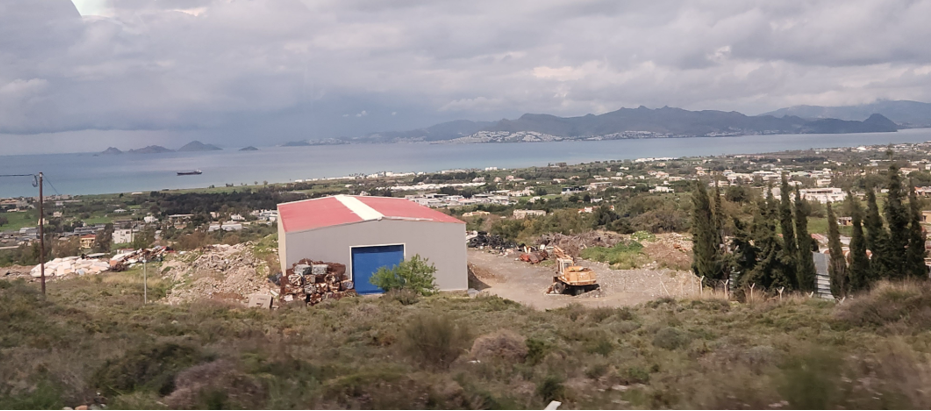
Former Vineyard Site, Kos Island, Greece, 4 April 2026, photo by Lori Samuelson.

Money is another practical issue people overlook. If your family came from rural areas, carry some local currency. Credit cards aren’t always accepted, I ran into that repeatedly in Ireland and once in Greece when roadwork brought the internet down at the restaurant.

That said, I still prefer using a credit card whenever possible. With the right travel card, you’ll get a better exchange rate than most banks offer, and it gives you a clean, trackable record of your spending.

Now, let’s talk technology.

I use a phone plan that supports international travel. No roaming. I keep calls to a minimum, rely heavily on texting, and use my phone constantly for photos. Each night, I connect to hotel Wi-Fi and upload everything to Dropbox.

Why? Because I once lost photos in the backwoods of Mexico when I crushed my phone, and I don’t make the same mistake twice.

I also use Geni, my ChatGPT research assistant to help me identify photos when I get home. What was the name of the location of a statue of Leonis? The best part with this trip was the translations.
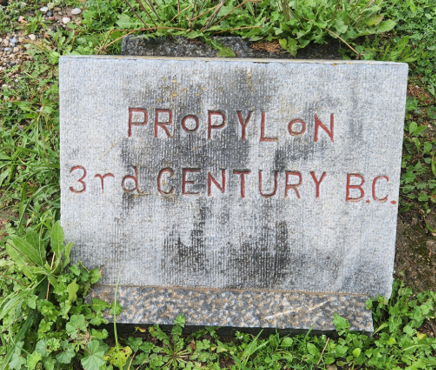
Asklipieio Archeaological Site, Kos Island, Greece, 4 Apr 2026, photo by Lori Samuelson.

There were no English markers as we toured Asklipieo so I took photos so I could later discover what we were looking at. Geni told me this means memorial markers, which makes sense as the next photo (below) shows recesses in a wall that likely once held those markers:
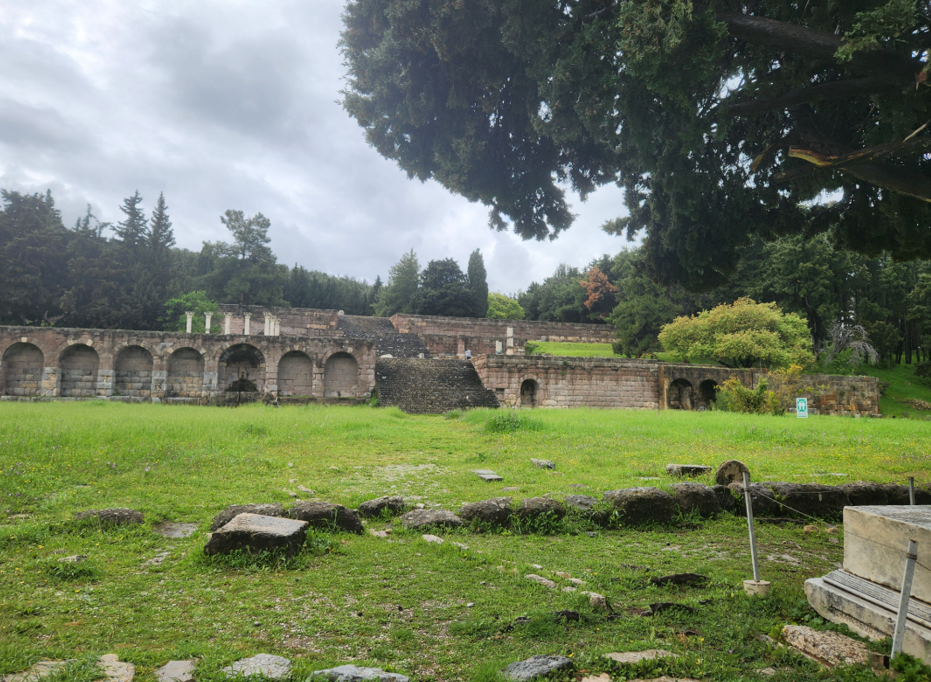
Security and customs were another big concern people raised.

We had no major issues though I’ll admit O'Hare International Airport tested my patience.

Coming back into the U.S., you have to retrieve your luggage, clear customs, recheck your bags, and then go through security again if you have a connecting flight. It’s inefficient, but it is what it is.

Customs itself took about 15 minutes. United Airlines had staff ready to help recheck bags quickly, and there were helpful Traveler’s Aid volunteers guiding people to their gates. Thankfully, there were no ICE agents in sight, just people actually trying to help travelers get where they needed to go. No chaos, just a system that could be better.My only issue? Exhaustion.

I forgot I had a tiny bottle of water in my bag, security flagged it. Then they asked if I had a laptop. I didn’t but I did have Kindles. That triggered another rescan.

Here’s the irony: every other airport we passed through: Fort Wayne, Vienna, Munich, Athens, Crete, Kos handled this without issue. Chicago? Not so much. You’d think one of the busiest airports in the world would have updated equipment by now.

Stateside, things can be just as odd. Earlier in March, we had “enhanced security” in Fort Wayne; meaning we had to walk past a dog just to enter the bridge. Two weeks later, nothing.

Welcome to consistency, American-style.

We do have TSA Pre Check but not Global Entry. I try to fly into Detroit rather than Chicago which has a much smoother customs with shorter lines. I've tried several times using the Mobile Passport Control app (free) but it never works for me.

Another question I’ve been getting: where next?

Honestly, nowhere overseas for now.

I’m not booking international travel until there’s a change in “leadership” in the U.S. I’m not interested in last-minute cancellations or absorbing costs because someone decides to escalate tensions. Add in rising oil prices and airlines cutting routes, and it’s just not worth the gamble at the moment.

Otherwise, I’d already be planning a trip to Barbados to walk in the footsteps of family lines from the late 1600s into the early 1700s.

For now, that one waits.

As for anti-American sentiment, no, I didn’t experience any hostility. What I did hear, repeatedly, was: “What’s wrong with Donald Trump?” Excellent question!

To their credit, people I met didn’t assume I represented every American viewpoint. That’s something we could learn from.

In the meantime, I have plenty of travel ahead, just closer to home. I’ll be presenting at the National Genealogical Society conference in Fort Wayne (hardly a trip for me!), along with events for Palatines in America and several venues across Texas, Utah, Minnesota, Kentucky, and the Midwest.

So no, I’m not slowing down.

Just adjusting the map for now.

Saturday, April 18, 2026

Greece: Tourist and Genealogywise


A sculptural gathering of the twelve Olympian gods, seated and standing in hierarchical order, evokes the structure of divine authority on Mount Olympus. At the center sits Zeus, surrounded by the major deities who governed every aspect of ancient Greek life—from war and wisdom to love, the sea, and the harvest. Unlike mythological battle scenes, this composition presents the gods as a unified, if complex, family—ordered, powerful, and ever-present in the Greek world. Photo by Lori Samuelson 25 Mar 2026, Acropolis Museum, Athens, Greece.

I’ve been getting quite a few messages asking about our recent trip to Greece, so I decided to put together a two-part blog with some background this week, and next week I’ll share recommendations if you’re planning your own adventure.

A week before our March departure, we received an email from our travel agent, Gate 1 Travel, telling us our cruise ship was stuck in the Strait of Hormuz. Translation: your trip might not happen.

Three days later, they gave us two options: cancel and get a full refund, or accept a revised itinerary: four days in Crete.

We went.

I refuse to let bullying politicians dictate whether I get to walk in the footsteps of my ancestors.

The trip itself? Smooth, except for the weather, which seemed determined to test our resolve. Intermittent downpours followed us as we climbed mountains in the cold. Where was Zeus when we needed him?

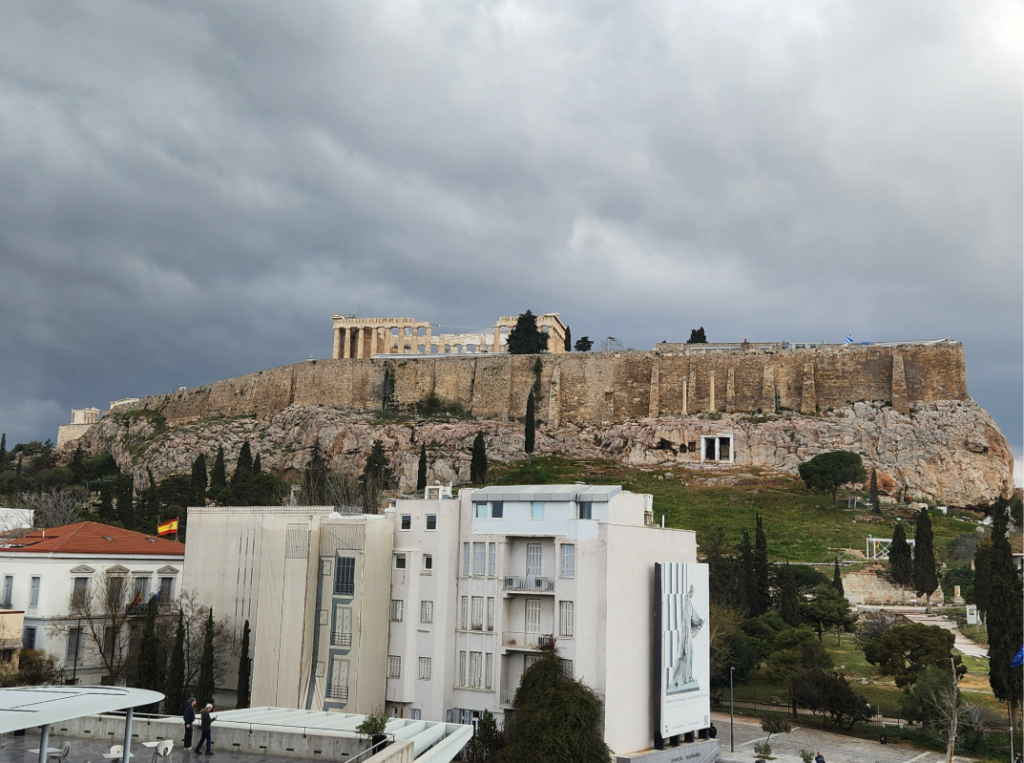
Storm clouds over the Parthenon, 25 March 2026, Photo by Lori Samuelson.

We made our way through Athens, climbed the Parthenon, continued on to Olympia, then Delphi where I picked up a cough that I chose to ignore, and on to Meteora. From there, back to Athens and a short flight to Crete.

And that’s where things got… strange.

I swear our hotel room in Crete was haunted. The first night, I had vivid, unsettling dreams. When I woke, my side of the mattress was halfway off the bed. I had to wake my husband to help fix it.

The next night? His turn. Same thing, odd dreams, followed by a thud as he hit the floor. His mattress was halfway off as well.

We’ve been married over fifty years. This has never happened. Not once.

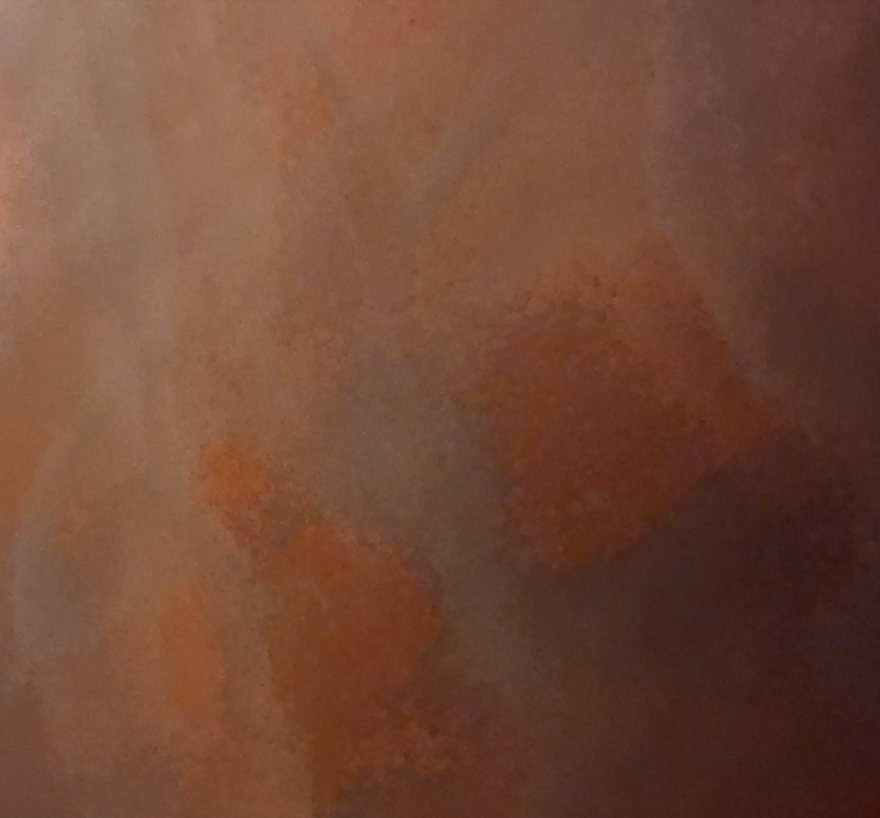
Sahara Dust Storm before it got worse - seriously! Photo by Lori Samuelson, Crete, 1 April 2026.

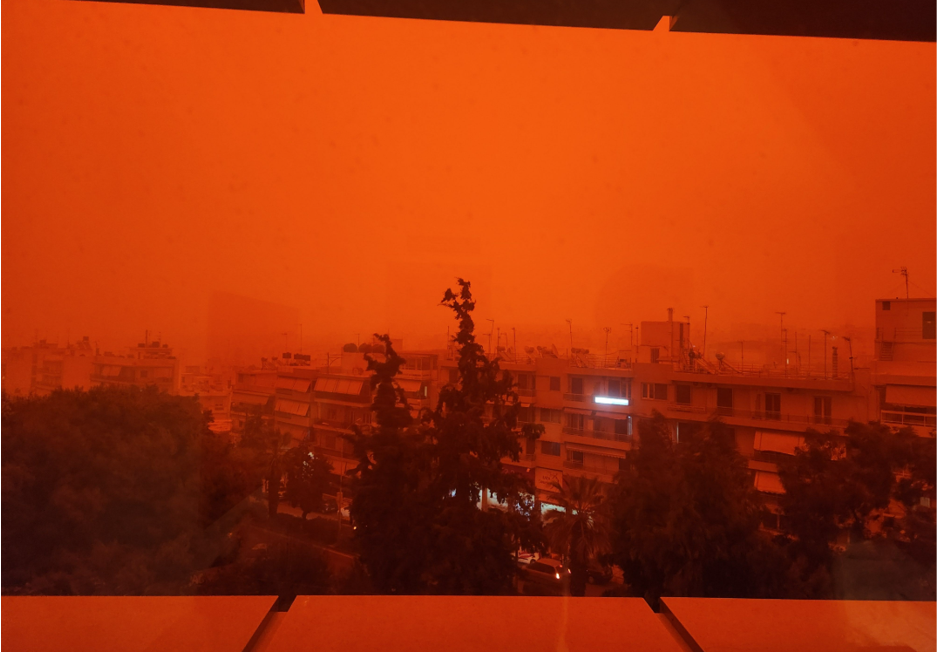
Then came day three: a Sahara dust storm. Apparently they happen about three times a year, but this one, on April 1st, of all days, was next level. Nature’s idea of an April Fools joke.

Housekeeping had left our balcony door open.

We came back to a room coated in fine orange dust. My cough worsened, my eyes started itching and watering, and breathing became… challenging. My husband? Completely fine.

So now we know; I’m apparently allergic to the Sahara. Who knew?

Sahara Dust Storm when it went to white out? (red out?) conditions, Photo by Jim Samuelson, Crete, 1 Apr 2026.

Here’s the part that still gives me pause. Had we stayed on the cruise, we were scheduled to be in Santorini that same day. Cruise ships can’t dock there, so passengers rely on ferries and with that weather, those ferries wouldn’t have run.

We would have been stranded. No hotel. No luggage. No backup plan.

So… should I thank those bullying politicians?

Nope. Still not doing it.

One of the highlights of the trip was meeting a probable cousin at a small taverna in Crete. She’s a student at the University of Crete, originally from Kos and she looked exactly like me fifty years ago. Same dark hair, same eyes, same build. It startled my husband more than a little. She is even majoring in an area I did.

Maternal genetics don’t mess around even though I'm unable to prove we're cousins.

The next day we flew to Kos Island, where I had booked a half-day tour through Travelocity. The company happily charged my credit card back in December and then never showed up.

Fortunately, the staff at the Kos Aktis Art Hotel stepped in and found a replacement: a wonderful guide from UniKos Tours.

He took me to what had once been vineyards, very likely the same land my family worked generations ago. Today, it’s a gypsy camp. The residents didn’t mind me taking photos, which felt like a small but meaningful connection to the past.

From there, we visited the Asklepieion of Kos, walked the mountainside associated with Hippocrates, stood beneath the tree where he is said to have taught, explored two medieval castles, stopped at Aphrodite’s temple where the sky promptly opened up and drenched us and found a perfect place to watch the sunset from a mountaintop.

It was, in a word, extraordinary.

Our return home, however, was anything but.

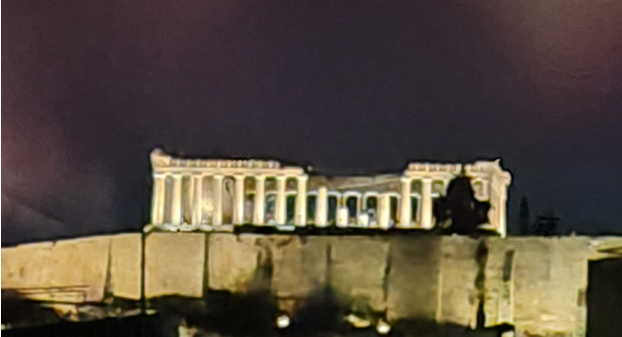
Parthenon at Night. Photo by Lori Samuelson 25 March 2026.

By then, my cough had worsened and my eyes were constantly watering. We spent a sleepless night in the Athens airport before flying to Munich (2.5 hours), waiting two more hours, then enduring a 9.5-hour flight to Chicago. After that? Two hours navigating customs and security, then sprinting to catch our final 30-minute flight to Fort Wayne. We made it with 23 minutes to spare.

Then came the 40-minute drive home.

Happy Easter.

Easter Monday was spent going from doctor to doctor in Auburn. No one had seen a “Sahara dust storm victim” before, which didn’t inspire confidence. My physician child kept telling me to just ask for allergy meds, but no one would listen. I kept getting sent somewhere else.

I finally landed in an eye doctor’s office, someone who actually knew what they were looking at, and I’m now on the mend.

Several locals have told me they’d never travel the way I do, for fear of getting sick.

I’d do it again tomorrow.

Life is what you make of it. Fear doesn’t take you anywhere worth going.

Next week, I’ll answer some of the questions I’ve been getting about traveling to places a little off the grid.

Wednesday, April 8, 2026

An Island Without a Name

Photo by Lori Samuelson 4 April 2026

Did you guess where I traveled? It was Kos Island, Greece.

I’ve gone back in time, way back, to a place where my ancestors lived nearly 2,000 years ago. This journey didn’t begin with a record set or an archive, but with a story passed down by my grandmother. She said our family once left an island to the south, around the time of Christ. They were vintners. There were too many people. The land was dry. They left because they had to. She didn’t know the name of the island, only the reason they went.

For years, that story lingered as just that: a story. But when mitochondrial DNA entered the picture, something remarkable happened. My mtDNA traces directly across Kos Island, an island whose name my family has carried, in one form or another, since at least the 1200s, when I first find them documented in their later home in Croatia. Even more compelling, historical research confirms that Kos was overpopulated and experienced periods of drought roughly 2,000 years ago. The pieces fit, not perfectly, but persuasively.

What fascinates me most is not that the story was complete, but that it was true enough. Family stories rarely preserve dates, place names, or precise routes. What they do preserve are motives: hunger, pressure, hope, survival. In this case, the story of farmers leaving an unnamed island aligns with both genetic evidence and environmental history. That’s not coincidence, that’s migration memory.

This is why I never dismiss family stories outright. Even when details are missing or blurred, they often contain a core truth waiting to be tested. With the right tools, DNA, geography, climate history, and records, we can sometimes confirm far more than we expect. Migration leaves footprints not just in documents, but in names, occupations, and the quiet persistence of who we are.

Hints for Family History Travel in Chaotic Times

  The Agean Sea from Kos Island, 4 Apr 2026, photo by Lori Samuelson. Last week I shared the story of our trip to Greece including my l...