
Sunday, May 8, 2022
http://www.genealogyatheart.com/?p=2015

Saturday, April 30, 2022
Tips for Archive Visits

Like me, it's probably been a while since you have visited archives for research purposes. Last week I mentioned I had returned to two local to me archives and I'd provide some tips this week.
You know that old saying, you never forget how to ride a bike. The same goes with researching in archives, however, there is a learning curve to get back to peak performance. I say that after deciding I would resume riding a bike during the pandemic and falling off in the street. I was fine, with a few minor scratches but a driver passing me was panic-stricken thinking he was the cause of my accident. Nope, my cell rang and I was trying to remove it from my pocket while maneuvering around a parked car with an oncoming car headed towards me. Not a brilliant decision!
Last week I found myself in the same euphoric feeling I had when taking my joy ride. It was so awesome to be going back to do boots-on-the-ground research. The anticipation colored reality.
I'm hoping my lessons learned or should I say, re-remembered, will help you when you start traveling again.
- Baby Steps First - I recommend you get those boots wet locally before embarking on a cross-country trip. You'll be ready if you've practiced a bit closer to home first. Remember, if you miss something nearby you can always return but not so much if you're far away.
- Pack Smartly - I always took a mid-sized plastic bag to contain my needed supplies so I took it out and thought I was ready to go. I use the see-through bag so archivists can tell I haven't brought in any banned items - like pens. Pens are a no-no in archives! My bag contains a small magnifying glass, gloves, a small ruler, a few engineering pencils, a tiny notebook, a couple of quarters if I need a snack during a break, small stickees, and a thumb drive. Except, I didn't check before I went and had removed the post its. I use them to tab pages that I want to copy or photograph. So, I had to take photos as I went through. Not a major issue but it changed my typical process. I also had taken out the thumb drive which I didn't need at the first archive so I hadn't realized it was missing until I showed up at the second and could have used it. There is a workaround - email yourself whatever you were going to save to the drive.
- Dress Professionally - We've been home for years now so we've become a tad, how should I put it, too comfortable. We've also aged and perhaps put on some pounds so make sure your outfit fits comfortably before the day you're leaving. I usually wear long pants that are a step up from jeans but not super dressy. I pair it with a short-sleeved top or blouse and bring a business jacket or sweater. Archives are often kept cold to preserve the artifacts. Shivering is not conducive to researching! Side note: You might be mistaken for a staff member due to the way you are dressed; that happened to me twice one day. That validated my outfit was appropriate.
- Hydrate - water is usually not permitted so check ahead to see if you can store a bottle in a locker, with a snack if you have blood sugar issues. I didn't think this would be a problem but my trip lasted longer than I anticipated. I'm still leery of using water fountains and the first archive didn't have a vending machine.
- Call or email to verify what is on the archive's website. As I mentioned last week, I missed clicking a button that would have taken me to schedule a visit. Since I was the only one there I was permitted to schedule on the spot but if that hadn't been available, I would have wasted two hours as it was an hour each way from my home. This gets me to think about driving again. You may have just driven on local streets for the last few years and now you're back on an interstate during rush hour. Taking it slow isn't an option as people will be changing lanes around you. I witnessed some road rage, thankfully not directed at me. People have become more impatient or perhaps, we just forgot what commuting was like. Just be careful.
Enjoy your archive visit!
Saturday, April 23, 2022
A Return to the Archives

I'm calling what happened a two for one. This week, I was able to resume visiting local archives. Oh, what a feeling!
I scheduled a visit with the first archive to review their holdings on a pioneer of my town who I'm writing a journal article about. After spending three hours reviewing the documents I was stymied by one that was a bibliography missing the previous page. I took a note to find the information elsewhere.
Since it's been a long time since I visited the museum part of the archive I decided to take a look around. One of the docents saw me pondering an exhibit and we got to talking. I mentioned how I was confused by the display as I'd never seen a setup like it was (a barbershop in the same room with a post office in the back and a general store adjacent to the barbershop). He said he thought it was off, too, and said he assumed it was due to space limitations.
One thing led to another and the topic turned to a Super Fund site located in my city. He was knowledgeable as to what had occurred as he had been employed there for 10 years as a chemist. Honestly, I don't recall many details as I was living in another part of the county when the plant closed so I hadn't followed the story closely.
The man claimed that the company had followed all federal guidelines and explained the process that had been used to work with the lower grade phosphate; they incinerated it at a high temperature so it would form a softball size structure. He did say that when the plant first opened in the late 1940s that process hadn't been used and some chemicals had been discharged into the ground. Over the years, he claimed, the company had corrected that problem.
The clincher to the story is that he claimed the company was shut down when a finding of arsenic was discovered when an elementary school across the street from the plant was going to install playground equipment. The company was blamed for the arsenic though they never used it.
I asked how the arsenic possibly got there and he didn't know. Then it hit me; it was the site of a former sawmill from the late 1800s. Arsenic was used to treat wood to preserve it from insects.
I told the gentleman that I thought he should record his memories of working at the plant but he declined. My take is he was still bitter over his job loss. I decided to blog the story, keeping him anonymous at his request, because there should be a record of his insider view of what occurred.
I discovered after I got home that the missing bibliography page was housed in a book in a university's special collections department. Two days later I arrived to find the information.
Somehow, when I went online to check holdings I did not see a button that I was now supposed to make an appointment to view the book. Luckily for me, the kind student who was tending the desk helped me so I was able to find the information. Eureka! The page contained a name of an author for a book I had at home that had reported the story I was writing about but added where she had found the information - in an unpublished, undated manuscript held at a museum that was now permanently closed. The author mentioned it was missing when she was seeking it, probably in the late 1960s. So, now I'm on the hunt for a missing manuscript.
While I was at the second archive, the student brought out a book I hadn't asked to see and said he thought I might be interested in it. I looked through it and got some ideas for future research.
Boots on the ground enabled me to get additional information about topics I might investigate someday. That was value-added that I find well worth the trip.
Saturday, April 16, 2022
Asking the Right Genealogical Questions

"Ask and you shall receive and your joy shall be complete" (Matthew 7:7) was a Bible quote my mom used often. As a child, I sometimes had a difficult time speaking up to those to that I wasn't close. When I would come home and complain about an injustice that had occurred at school mom would suggest I communicate what I needed. I would return the next day with a practiced speech; I can't say speaking up always rectified the situation but it was a valuable life skill to practice.
Side note: When speaking up didn't work and I'd come home and complain to mom her next response was always, "When you have as much education as your teachers then we'll listen to you." In other words, suck it up and move on.
Asking for the right information is critical in genealogy. Years ago, I interviewed my maternal grandmother about her early life. I asked where the family lived when they first moved to Gary, Indiana. She replied, "On the corner of Adams and Ridge Road; we rented the top floor." It didn't dawn on me that I should have drilled down further. There are four corners, which corner? What was the address? Rented from who? How long did you live there?
Unfortunately, my family lived in that location between the census years. There are City Directories, however, none mention them, likely because they were renting. Because I didn't ask the right question I will probably never know the answer.
My husband's maternal great-grandfather's obituary states he was a "long-time teacher and principal." What was the name of the school? Where was it located? What subject did he teach? What grade level did he teach? What years did he teach? When did he become a principal?
I have pieced together some of his work life through the usual means - censuses, City Directories, county school records, and his maternal aunt's diary, however, there are large gaps. For a time, he worked in a private school that has long since closed. Again, I'll likely never get a complete picture.
I decided to Spring Clean a document storage bin yesterday and found in a folder with my husband's name on it that he had submitted several employee suggestions to US Steel in the 1970s. One contained a way to filter the air to reduce pollutants. We've been together nearly 50 years and were together when he submitted his idea but I had no idea he had done that. Attached to the idea was the company's response which I'm sure you won't be surprised about - they didn't think it was needed.
Keep these lessons in mind when you embark on interviewing your family members. Better still, make sure you've recorded your life events for your descendants. Rummage through your saved documents to jog your memory of events or perhaps, like me, discover new information you already had. Seeing your family this Easter - Passover - Ramadan - is a great time to ask the right questions.
Saturday, April 9, 2022
Family History Research - The Backstory of the Document


Saturday, April 2, 2022
Genealogical Fence Mending


Saturday, March 26, 2022
Genealogy Challenge: Research Your Town's Founding Ladies

Subscribe to:
Posts (Atom)
Don't Let America Lose Its Archives
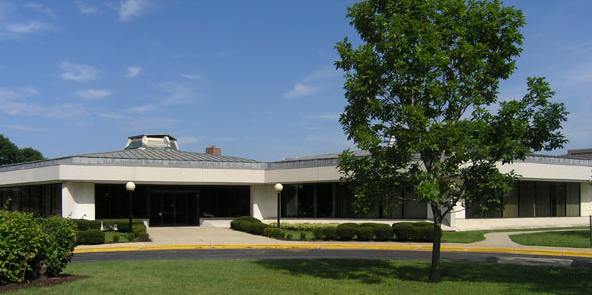
Ironically, photo of NARA Chicago from the National Archives. On 23 June 2026, the National Archives and Records Administration (NARA...
-
AI Image If you build enough family trees, you start to notice patterns that don’t show up in history textbooks. Clusters of deaths. ...
-
AI Generated As a long-time Ancestry.com user, I decided to give their new Pro Tools a spin during the July 4th weekend. With a family mem...
-
AI Image I’ve got a tip for you—one that might just change the way you think about accessing records from the National Archives in Wa...


