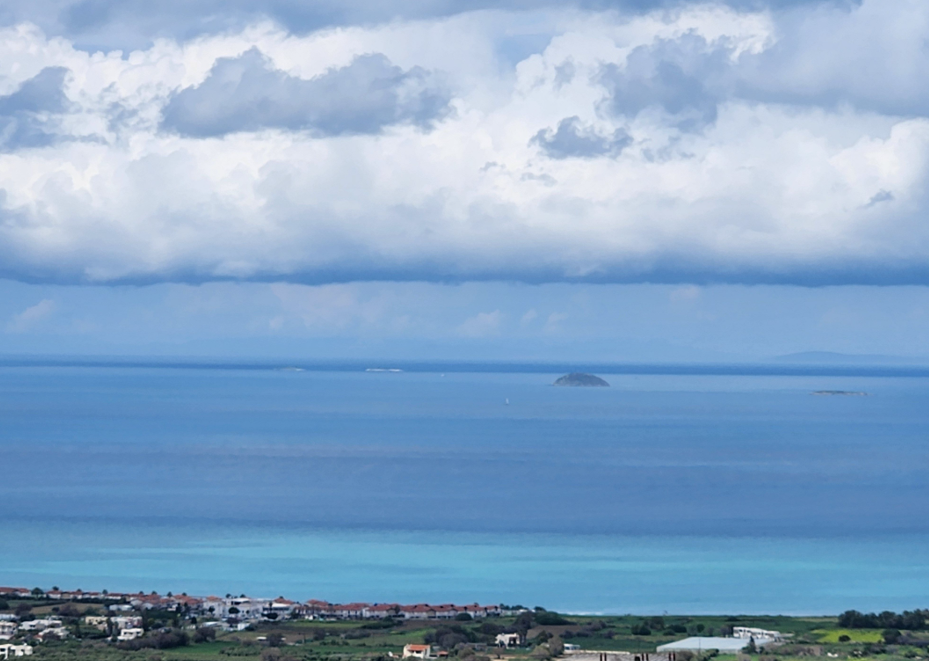
Last week I shared the story of our trip to Greece including my long-awaited journey to Kos Island, where my family lived some 2,000 years ago, based on mtDNA and family tradition. This week, I’m answering the questions I’ve been getting and offering a few practical tips if you’re planning a similar trip to anywhere in the world.
Let’s start with the obvious, how do you even get to a remote place like Kos?
Your first step is to determine a route. Kos is not on the standard cruise circuit. You have two options: fly from Athens (about 55 minutes) or take a boat from Bodrum, Turkey (roughly 15 minutes). We flew from Athens since we were already returning there from Crete.
Once you’ve figured out how to reach your ancestral location, the next step is getting around. You can rent a car if you’ve secured an international driver’s license or you can hire a driver.
I hire a driver. Every time.
Why? Because I don’t need the added stress of navigating unfamiliar roads, signs, and driving customs while trying to absorb a place that actually matters to me. A good driver knows exactly where to go, how to get there efficiently, and more importantly, what you shouldn’t miss. They often become your best local resource for food, history, and those small, meaningful stops you would never find on your own.
People always ask how I manage to find trusted drivers around the world. The answer is simple: I build relationships. Conferences, professional networks like Association of Professional Genealogists and LinkedIN, and years of working with people in different regions.
In Sweden, I hired a genealogist who also worked as a part-time tour guide for Gate 1 Travel. In Croatia, I was connected with a genealogist/archaeologist. In France and Germany, a sixth cousin I met at a conference volunteered.
Kos was different, I had no contacts. So, I took a chance through Travelocity, and it paid off. GetTransferKOS was excellent. Once the driver understood why I was there, he went beyond the standard route to our hotel and showed us sites my ancestors would have known. That’s the difference between transportation and experience.
Next question: hotels.
If I’m traveling with a company like Gate 1 or Trafalgar, I let them handle accommodations. But I almost always add extra days, before or after the tour, to explore independently. Our ancestors rarely lived in postcard destinations. They lived off the beaten path, and if you want to understand their lives, you need to go there too.
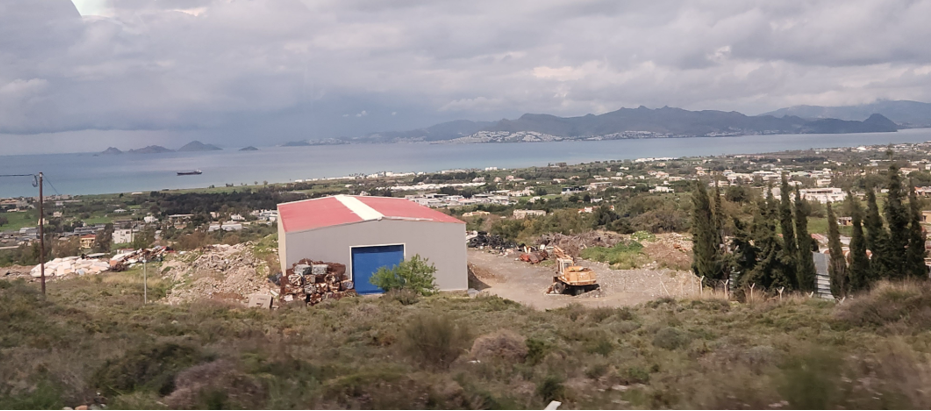
Ask your hotel concierge or desk clerk for off the beaten locales you should visit. When my Travelocity half day tour didn't show up, the desk clerk called a colleague who arrived within 20 minutes to show us his beautiful homeland, along with fresh baked cookies his wife was making for Easter. He knew where the vineyards once grew on Kos and took us there. This was important to me as no physical records have been found to mark the location which was where my ancestors once lived:
Money is another practical issue people overlook. If your family came from rural areas, carry some local currency. Credit cards aren’t always accepted, I ran into that repeatedly in Ireland and once in Greece when roadwork brought the internet down at the restaurant.
That said, I still prefer using a credit card whenever possible. With the right travel card, you’ll get a better exchange rate than most banks offer, and it gives you a clean, trackable record of your spending.
Now, let’s talk technology.
I use a phone plan that supports international travel. No roaming. I keep calls to a minimum, rely heavily on texting, and use my phone constantly for photos. Each night, I connect to hotel Wi-Fi and upload everything to Dropbox.
Why? Because I once lost photos in the backwoods of Mexico when I crushed my phone, and I don’t make the same mistake twice.
I also use Geni, my ChatGPT research assistant to help me identify photos when I get home. What was the name of the location of a statue of Leonis? The best part with this trip was the translations.
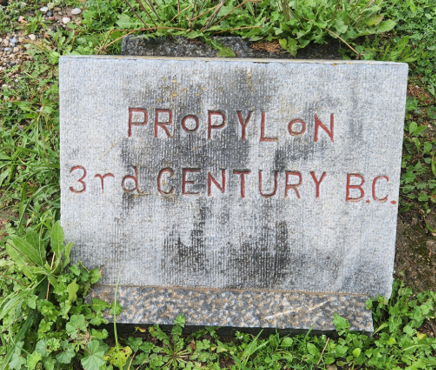
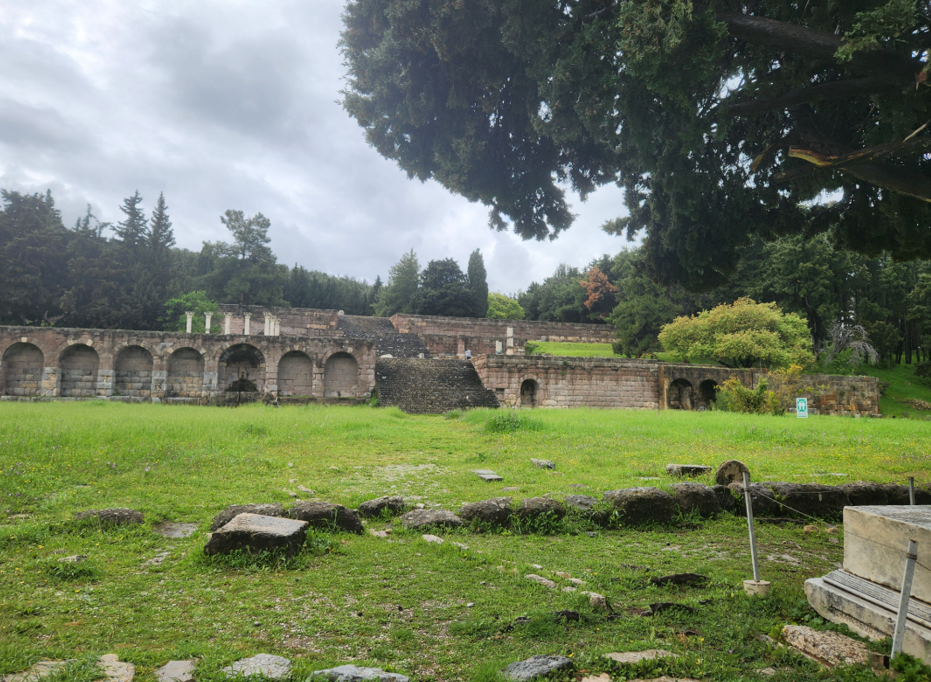
There were no English markers as we toured Asklipieo so I took photos so I could later discover what we were looking at. Geni told me this means memorial markers, which makes sense as the next photo (below) shows recesses in a wall that likely once held those markers:
Security and customs were another big concern people raised.
We had no major issues though I’ll admit O'Hare International Airport tested my patience.
Coming back into the U.S., you have to retrieve your luggage, clear customs, recheck your bags, and then go through security again if you have a connecting flight. It’s inefficient, but it is what it is.
Customs itself took about 15 minutes. United Airlines had staff ready to help recheck bags quickly, and there were helpful Traveler’s Aid volunteers guiding people to their gates. Thankfully, there were no ICE agents in sight, just people actually trying to help travelers get where they needed to go. No chaos, just a system that could be better.My only issue? Exhaustion.
I forgot I had a tiny bottle of water in my bag, security flagged it. Then they asked if I had a laptop. I didn’t but I did have Kindles. That triggered another rescan.
Here’s the irony: every other airport we passed through: Fort Wayne, Vienna, Munich, Athens, Crete, Kos handled this without issue. Chicago? Not so much. You’d think one of the busiest airports in the world would have updated equipment by now.
Stateside, things can be just as odd. Earlier in March, we had “enhanced security” in Fort Wayne; meaning we had to walk past a dog just to enter the bridge. Two weeks later, nothing.
Welcome to consistency, American-style.
We do have TSA Pre Check but not Global Entry. I try to fly into Detroit rather than Chicago which has a much smoother customs with shorter lines. I've tried several times using the Mobile Passport Control app (free) but it never works for me.
Another question I’ve been getting: where next?
Honestly, nowhere overseas for now.
I’m not booking international travel until there’s a change in “leadership” in the U.S. I’m not interested in last-minute cancellations or absorbing costs because someone decides to escalate tensions. Add in rising oil prices and airlines cutting routes, and it’s just not worth the gamble at the moment.
Otherwise, I’d already be planning a trip to Barbados to walk in the footsteps of family lines from the late 1600s into the early 1700s.
For now, that one waits.
As for anti-American sentiment, no, I didn’t experience any hostility. What I did hear, repeatedly, was: “What’s wrong with Donald Trump?” Excellent question!
To their credit, people I met didn’t assume I represented every American viewpoint. That’s something we could learn from.
In the meantime, I have plenty of travel ahead, just closer to home. I’ll be presenting at the National Genealogical Society conference in Fort Wayne (hardly a trip for me!), along with events for Palatines in America and several venues across Texas, Utah, Minnesota, Kentucky, and the Midwest.
So no, I’m not slowing down.
Just adjusting the map for now.



No comments:
Post a Comment